ON THIS TRIBUTE
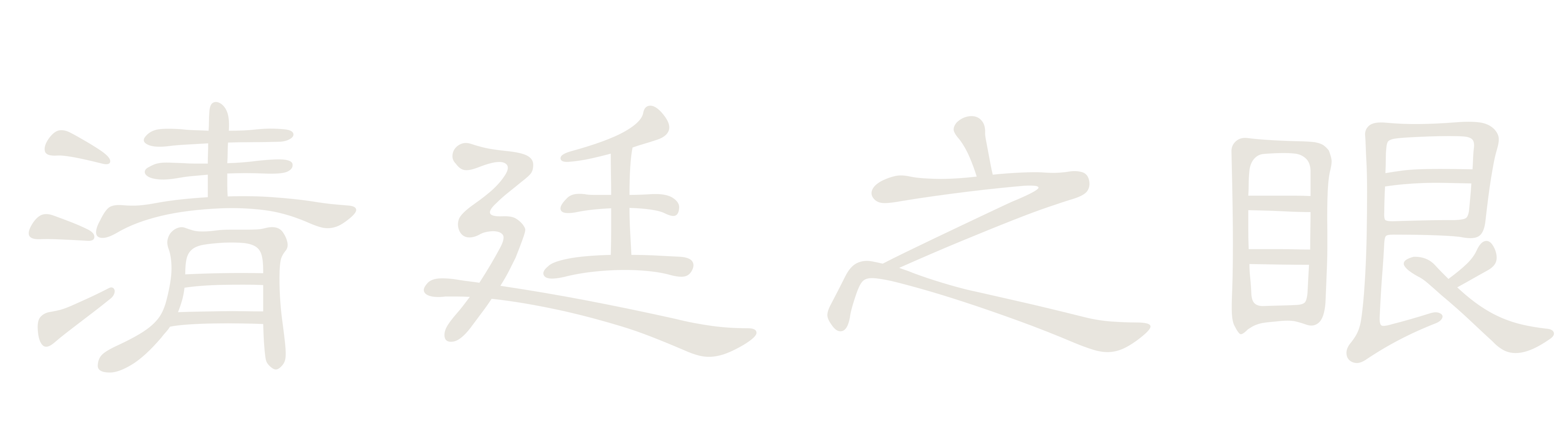
Qing Ting Zhi Yan takes inspiration from Xu Bing and Dragonfly Eyes. This tribute acknowledges a way of working: entering a world that has already changed, examining how images acquire meaning, and allowing a work to carry unresolved questions forward.
A particular debt
Xu Bing was my teacher. I want to place a particular expression of gratitude beside Qing Ting Zhi Yan. A teacher’s influence may become legible years later, when one encounters different materials and unfamiliar difficulties. It can return through judgments: what deserves the work, where a question begins, when an answer has become too comfortable.
Dragonfly Eyes has continued to matter to me at this level. It brings images that operate throughout everyday life, often outside the usual field of art, into a reconsideration of cinema. Through this opening, a work can address narrative, identity, reality and the act of looking. A medium that seems fully established can begin again from its edges.
As I imagined an impossible collection of surveillance images from Qing history, that influence became clear again. The distance between a historical subject and a surveillance viewpoint obliged me to keep asking: what position am I constructing for the viewer? Why might someone believe this image? What does this position leave outside its field of view?
Images before a story
Dragonfly Eyes builds a fictional feature from surveillance images obtained through public channels. People recorded in actual situations enter another set of relationships; disconnected locations and moments acquire a cinematic continuity. UCCA’s account of the work and Xu Bing’s interviews describe this fundamental relation between recorded footage and invented narrative. [1][2]
For me, this opens a thought: an image can contain possibilities beyond its original purpose. A camera has already seen something, while a story has yet to decide how to use it. Someone turns, someone waits, two people pass in a corridor. Within a new relation, the weight of each action can change.
We often understand filmmaking as the realization of something conceived in advance. Dragonfly Eyes makes me willing to imagine that the world has already left sentences we have not learned to read. Creation can begin with attentive reading, allowing material to alter an intention. I have carried this patience away from the film.
Learning from material
Discussing Dragonfly Eyes, Xu Bing relates the constraints of existing images to the given conditions of printmaking and written characters: expression emerges through relationships between fragments that are already there. [3] This connection has helped me understand his method. Material has conditions of its own. An idea must submit to being tested within them.
The historical material and image conditions of Qing Ting Zhi Yan differ substantially from those of his film. I hope to retain the seriousness of this encounter with limits. Once a viewpoint is established, a tree may obscure a person, someone may walk out of frame, a crowd may become illegible in the distance. A consequential moment may enter the picture only as a partial action. The work has to accept these insufficiencies and consider what they allow it to say.
For me, a form becomes meaningful through the decisions it continues to shape. When surveillance determines duration, the scale of a person, the patience required of a viewer and the presentation of an event, it begins to participate in thought. Learning from a method includes accepting the inconvenience it brings.
Two relations to truth
The surveillance fragments in Dragonfly Eyes once recorded actual situations; an invented narrative establishes new connections between them. The imagined historical surveillance images of Qing Ting Zhi Yan are contemporary creations from the outset. No camera waited at those historical sites. These pictures cannot retrospectively become evidence that an event happened in a particular way. The distance between the two works must remain clear.
I understand Qing Ting Zhi Yan as a hypothesis about looking at history. Historical sources preserve events, individuals, institutions and disputes, but rarely a continuous experience of space. How does a crowd pass through a gateway? How does an order move along a line of people? Where does someone look as danger approaches? Giving these details an image requires imagination, and with it room for discussion and revision.
The appearance of surveillance can readily produce a feeling of evidence. That feeling is itself a subject the film must confront. Making a scene credible does not establish that it occurred exactly as shown. I hope this tension allows viewers to notice, while looking at history, how their own certainty is formed.
A name across time
In Mandarin, qing ting, meaning the Qing court, closely echoes qing ting, the dragonfly. The name Qing Ting Zhi Yan holds that encounter within its sound. Someone who knows the earlier film may hear the echo before recognizing the historical distance carried by the changed characters. Moving from an insect’s compound eye to an imperial court brings vision, power and history into one question.
I hope the name retains some humor. It can offer a way into a history that is grand, solemn and often narrated as if already complete, briefly loosening that composure. The humor should then lead toward harder questions. When a dynasty’s center is distant, and an emperor occupies only a small part of the frame, how else might we understand the weight of an event?
The echo also makes this tribute an ongoing responsibility. It asks me to take the earlier work’s questions seriously, to state clearly what I have changed, and to reach my own judgments within different material. A related name still has to be sustained by a particular work.
The responsibility of looking
Surveillance brings many people into view without necessarily telling us who they are. In a historical film, this anonymity demands attention. The rise and fall of a dynasty can quickly be reduced to a few celebrated names; a war can become a densely moving crowd. As an image grows in scale, individuals can disappear from our attention.
I want the film to preserve time for people who are not named. The person standing outside a gate, the person searching for family, the person waiting at the end of a line: each has a situation of their own. Even where the camera cannot approach, editing and the allocation of time should make their presence felt. Ordinary actions can restore a human scale to momentous events.
This responsibility extends to violence. Looking from far away can produce safety, as though the viewer need pay no price for what is seen. Cinema must examine that safety and resist arranging suffering as a set of specimens by which an audience can identify historical events. To learn from the earlier film is also to continue asking what remains unresolved between an image and those who are watched.
Keeping a beginning open
I choose to understand Dragonfly Eyes as a beginning from which work can continue. The invitation I find in it concerns cinema’s materials, the viewer’s position and the organization of narrative: each can be questioned again under new conditions. This sense of a beginning is my own understanding as a subsequent maker.
In his 2016 interview, Xu Bing already connects surveillance images with new ways of working, human self-observation and historical understanding. [2] The reach of these questions exceeds what a single film can answer. They change as the world changes, and take different branches through the experience of different artists.
Qing Ting Zhi Yan hopes to offer one particular response. Placing a contemporary regime of looking inside an earlier history makes familiar scenes strange. It can also help us recognize how our present ways of knowing the world shape our imagination of the past. The strength I receive from the earlier work lies in this possibility of continuing.
To keep looking
As Qing Ting Zhi Yan develops toward viewing in space, I want these questions to remain close. More images and a wider field of vision do not necessarily bring fuller understanding. A person can face many screens and still miss what takes place within them. The distribution of attention, the places where one may linger and the places that call for silence will all become part of the film.
This tribute stands beside an unfinished work. It gives an influence a clear place and leaves a measure by which the work ahead can examine itself. Having been a student carries gratitude, alongside a task that must be undertaken independently. I can allow that gratitude to enter particular decisions, then let the work meet the attention of its viewers.
Thank you, Xu Bing. Thank you to Dragonfly Eyes for giving a question at the edge of vision a form through which it can continue to unfold. The Qing court has passed. Looking continues. I want to follow this inspiration and keep looking.
With Qing Ting Zhi Yan, a tribute to my teacher Xu Bing and to Dragonfly Eyes.
Sources & further viewing
- UCCA · Xu Bing: Thought and Method — “Phoenix and Dragonfly Eyes” audio guide ↗
The 2018 exhibition’s official audio guide describes the relation between actual surveillance footage and fictional narrative. In Chinese.
- The Art Newspaper China · 徐冰谈首部电影《蜻蜓之眼》:我的影片证实了《楚门的世界》的想象 ↗
19 January 2016. Interview and text by Wu Yifei. Xu Bing discusses surveillance, dispersed perspectives, artistic constraints and historical understanding. In Chinese.
- Duan Shaofeng interviews Xu Bing · 徐冰:“公共影像”与我们生活的时代 ↗
30 October 2019. Xu Bing discusses public images and the methodological connections between printmaking, writing and film. In Chinese.
- Harvard Radcliffe · Dragonfly Eyes: What Counts as Art Today?, 2018 ↗
Xu Bing’s lecture and discussion at Harvard Radcliffe. The institutional event page provides related video. Further viewing.
A text accompanying an ongoing film project.
CONTINUE READINGMethodology